
Here is the write-up for the Speaker information on their website:
|
Here is the write-up for the Speaker information on their website:
|
Networking is very important when you are doing genealogy. Researchers cannot operate in a vacuum. There are times when you can’t find or locate information about your family member in a library or a county courthouse. So what do you do? Well never lose hope that something is out there. You should ask a professional genealogist for help when you are unsure of your next step.
Another strategy is to reach out to your distant cousins. Interview your relatives about their own memories of the family member you are researching. Remember that your relatives or distant cousins have information that is not publicly available. It is possible you will find out that your relative has not made any further progress on the lines than you have, but each of you might have information about descendants that the other doesn’t have. Pooling your information may provide clues that will help you extend the line. The idea is to fill-in blanks in your family group sheets.
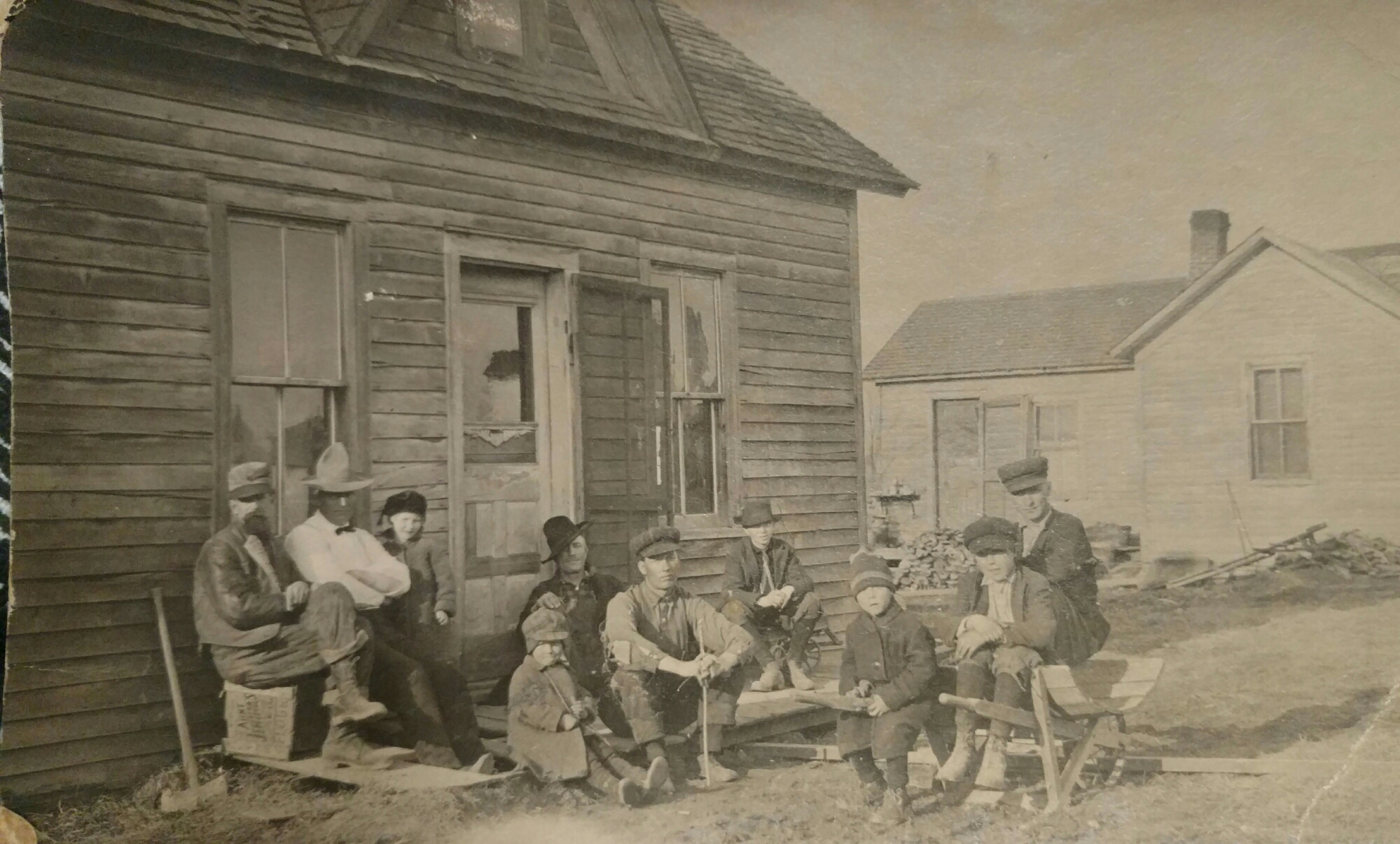
Postcard photo from Birchwood, Wi., July 6, 1917. From Mrs. Ernest Wendland to my Grandma Mrs. August Rettammel. My Grandma was Ernestine L. Wendland before marrying my grandpa in August 1909 in Lyndon Station, Wi.
The people in picture are Wendland in Washburn, Wi.
Hello everyone
I hope your summer is going well. Have you done any fun trips to historic sites in your area?
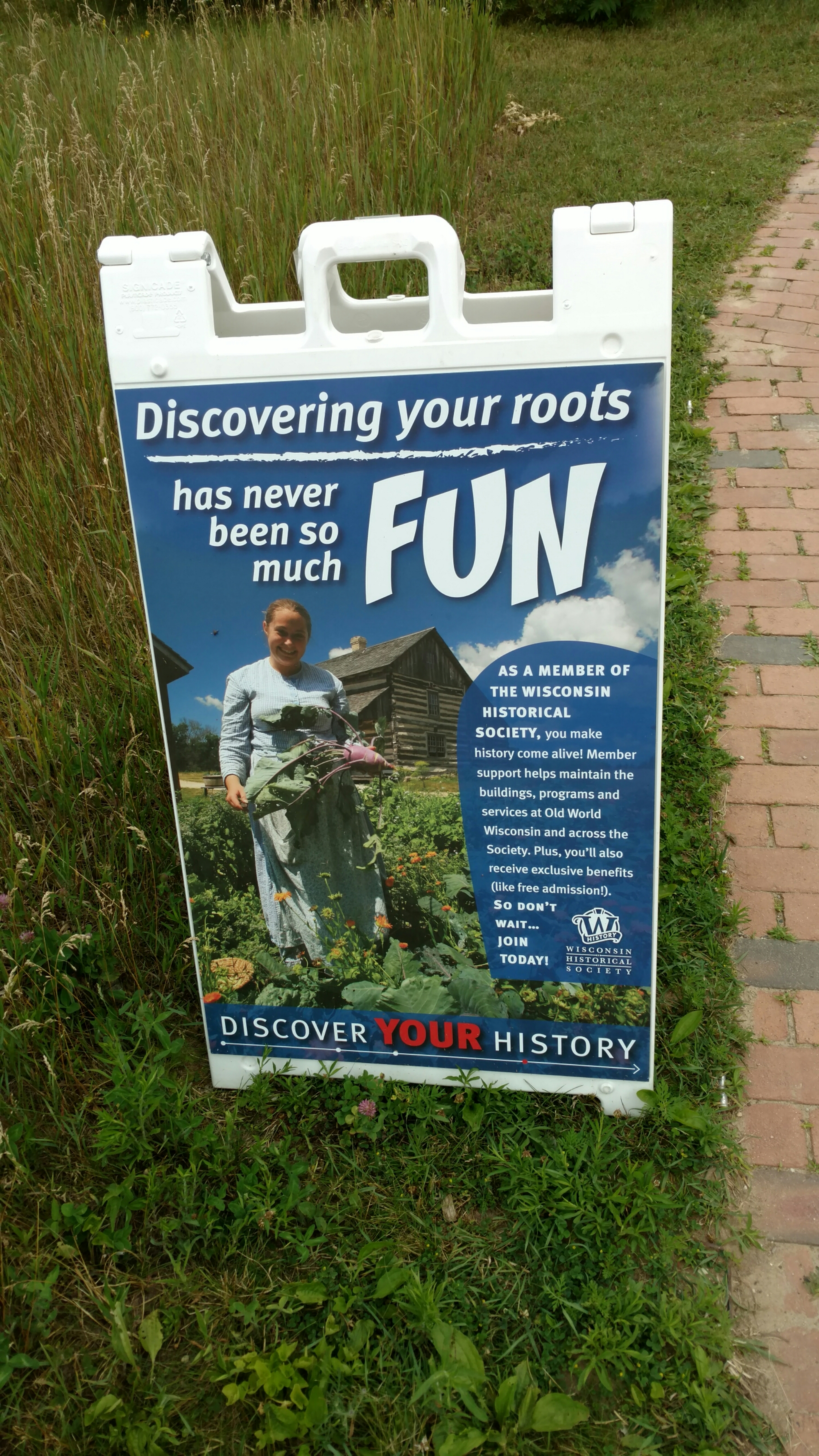
On July 4th I went with my wife and friends to Old World Wisconsin to celebrate Wisconsin History. For some time now this Wisconsin Historic Spot celebrates the 4th of July with a Parade, recitations and speeches of patriotic nature for all to hear in the Village Grove section of the site. Some of the items we witnessed on the day were the reading of the Declaration of Independence and reflections on 1776.
During our visit we also spent the day visiting with a Judge from the 1860s and playing a game of early baseball with gentlemen of the era right after the Civil War. Baseball 150 years ago was played in farm fields with the pitcher throwing underhand. No fast pitch then.
Our party interested in the German area so we visited three German farms, Schulz Family 1860 Immigrant Farm, Schottler Family 1870 Immigrant Farm and the Koepsell Family 1880 Immigrant Farm. Close by was the Kruza Family 1900 Polish Home. On the way to this area is an area called Pleasant Ridge African-American exhibits, originally west of Lancaster, near present-day Beetown in Grant County, Wisconsin, a community of African American farmers (former slaves freed by their Virginia owner ) settled in Wisconsin 1840s and farmed.
Prior to leaving we spent time at a newer exhibit called Catch Wheel Fever, where we learned and road some of the first designed bikes from the 1870s, with big front High-Wheel models.
I hope your summer is going well and you also have fun adventures that include history and genealogy.
Recently I was at the Wisconsin Historical Society and went to the 4th floor archive reading room to talk with an Archivist and learned that a resource I can offer clients is direct review of these collections like the Lyman Copeland Draper Manuscript Collection (this provides excellent information about the period in America between 1755 and 1815). Also the archives has an extensive Civil War collection with over 25,000 pages of documents, that includes primary sources including soldiers’ letters, diaries, photos and other materials. So if you have ancestor that was in America at this time, contact me for research service.
Besides my first genealogical research experience with a local society as a consumer, what has my business experience learned in working with genealogical societies?
I recommend that when you start a genealogical business to collect a list of your local, county and state-wide genealogy society contacts. To gather such information you can go to your local library or find them on the internet. The key is just to have easy access to a list that you as a business owner can quickly access when doing work for your clients. You can either keep a hard copy, an electronic document or spreadsheet. Whatever works for you is the key to having a system that helps you to be efficient and timely for your clients.
As a working genealogist I have learned that developing relationships or contacts with genealogical societies is important to a successful business and satisfied clients. In my business I have traveled to local genealogy or historic societies and charged mileage for use of my own personal vehicle for travel. For my business I have determined that a radius of about 100 miles from my home office is reasonable for clients. For clients that have records or needs outside of this mileage radius, I work with Area Research Centers in my State, and local genealogy society researchers who can look for records on site to help my client. [In a prior GenBiz Solutions article, I refer to this as a strategy for collaborating with other genealogists]. Prior to any extra expense for my client, I first provide a detailed written explanation by email about what other resources we may need to finish record collection. I don’t believe additional work should be done without full disclosure to the client that other expenses may incur to locate the records originally requested or that are newly found and will add to the family history search.
For example in the last year I had a client whose paternal family was located in a city that has an active historical society. Prior to going to this location I made sure to have my research log for this family current with findings. The main item for those starting a genealogy business is to think about your purpose and what you are looking for when you start field research for a client. I made contact with the local historic society through email and a follow-up telephone call to work out a date to visit and what records I was expecting to review during my scheduled visit. My experience has been that the local societies like to have time prior to a genealogist’s visit to prepare properly, so they can have the necessary index or books available along with someone there to help with questions. Remember that many of these local societies are managed by volunteers who like to help those doing family history searches. As a business owner it is prudent to leave the society a donation for their services. Remember you may use their services another time or another genealogist will, so acknowledging them is beneficial to all of us.
The result of my travel and time at the city (local) historical society was fruitful in the amount of information I found for the client’s family, including information about the business they owned over 100 yrs ago in the city. Due to the business and civic events this family was involved with I found a number of historic pictures that were not known by my client’s family.
A most recent experience for a client looking for probate records led me to make contact with a local society that is some distance from my location. This society after reviewing my request and credentials sent (at no cost) the records to an Area Research Center near me, where I reviewed the probate records. This is an example of how a genealogist works with their local societies and regional genealogical centers to find and provide access to the records for business clients.
Working with fellow genealogists, volunteers, and librarians can be rewarding for its shared passion of family history, and making connections can aid in your professional development and in the marketing of your business. Plus we always learn something new and enhance our skills as professional genealogists.
July 9 at 9am the Dane County Area Genealogical Society is doing a visit to the Wisconsin Historical Society (WHS). We are meeting at WHS and getting a tour, and time for people to do research.
Probably like most of you doing genealogy as a business today, your first experience working with or at a local genealogical society (sometimes referred to as a Historical Society) was when you started your own family research. As I have stated at the beginning of genealogy talks my own interest in genealogy began many years back as a teenager spending summers in a small town in Juneau County, Wisconsin where my parents both have roots, dating back to late 1800’s.
As an adult my real genealogical research began by learning and visiting the county courthouse register of deeds for any vital records. As I made these early visits over 15 years ago I happen to work next to a person who was a local historiographer for Juneau County. This local person was extremely helpful and clarified what the index information meant. We spent a couple hours together going through records, I was proactive in asking about what research she was doing and what tips she had for the local records. I then learned that she was part of the county historical society that helps established genealogists in the gathering of records for family history.
 Rettammel Genealogy Service