
My great-grandparents on my Maternal side, their wedding photo, 1903 in Lake Geneva, WI. My great-grandma came to America with her 3 sisters from Frankfurt, Germany in 1901. The sisters came through Ellis Island.
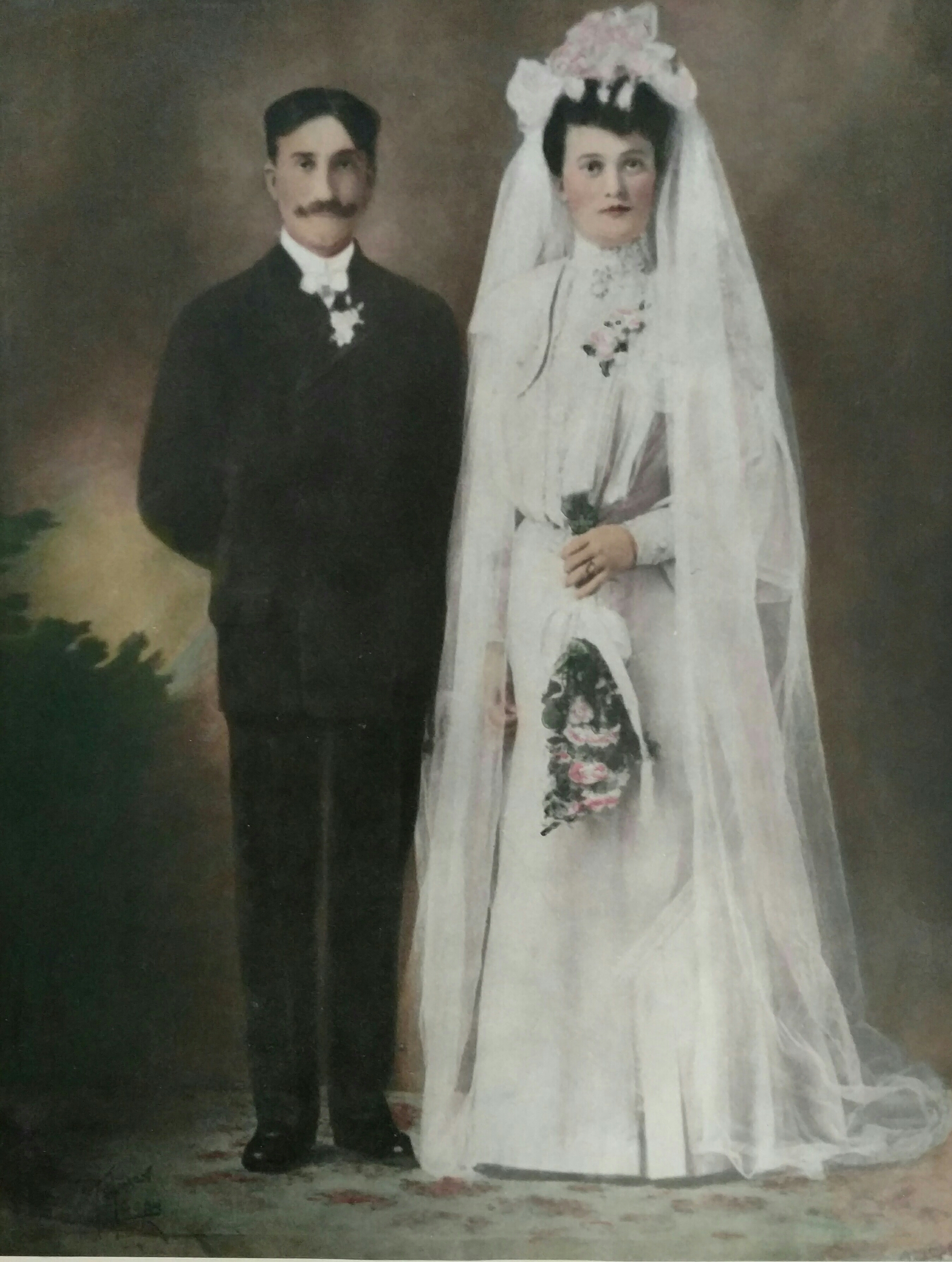
My great-grandparents on my Maternal side, their wedding photo, 1903 in Lake Geneva, WI. My great-grandma came to America with her 3 sisters from Frankfurt, Germany in 1901. The sisters came through Ellis Island.
Ship Keppler Voyage April 15, 1865
Hamburg Passenger Lists (1850-1934)
The following is found:
Passenger List 1
Keppler sailing from Hamburg to Quebec in April 15, 1865. On p. 2 of this passenger list we can find the following family:
A. Retthammel, 66 years old (Christian)
Contantia Retthammel, 60 years old
August Retthammel, 27 years old
Friederike Retthammel, 22 years old
Amalie Retthammel, 23 years old
The calculated years of birth fit very well to the data for August F. (1837, here 1838) and Christian (1799). And the year of immigration is 1865, just as listed for August F. Rettammel in the 1900 and 1910 census, I found.
Passenger List 2
Passenger lists of the harbor of Hamburg are preserved from 1851 forward. A search of Ancestry.com shows microfilm handwritten name index and the pages of the 1850s and 1860s passenger lists for Vol. 005 (9 Jan 1864 to 23 Dec 1865) of the index for “direct emigrants” we find the Rethammel family under “R”, page 13 of 28 pages.
The following was provided from this record:
(Ship) No. 14 Keppler to Quebec, Master Jurgens, April 15, 1865, Rethamel, Aug, wife, 3 children, p. 119. In vol. 019 of the passenger lists for direct emigrants (7 Jan 1865 to 23 Dec 1865) we can find the first page of the 1865 passenger list of the sail ship Keppler on p. 119 [image 57 or 592]
Here we can find the following information:
No. 22 AUGUST RETHAMEL, worker, 66 years
No. 23 CONSTANTIA RETHAMEL, wife, 60 years
No. 24 AUGUST RETHAMEL, worker, 27 years
No. 25 FRIEDERIKE RETHAMEL, wife, 23 years
No. 26 AMALIE RETHAMEL, unmarried, 22 years
the last place or origin or place of birth is listed:
Since 1945, the bigger part of Pommern has belonged to Poland and the great majority of the German inhabitants in that area had to leave in 1945. Today the name of Gross Boschpol is “Bozepole Wlk.” The population of Gross Boschpol in 1865 is still being researched, but in 1933 there were 361 inhabitants.
Most of the parish register records in Pommern were destroyed in 1945, so the records are limited. There were Lutheran inhabitants and Catholics in Gross Boschpol based on numbers from, 1904 I think that about 20-25 % of the Gross Boschpol inhabitants were Catholic. Near Gross Boschpol there were some villages with almost 100% Lutherans (like Damerkow or Goddenow) and villages with a Catholic majority (like Chmelenz, Paraschin or Felstow). This region was the border region between the Lutheran strongholds in the west and the Catholic strongholds just east of Gross Boschpol.
The Lutheran inhabitants of Gross Boschpol attended the church in Zinzelitz (Dziecieliec today) while the Catholic Church was in Rosalin (Rozlazino).
Since my Rettammel ancestors were Lutheran, the only Zinzelitz parish registers which have survived WWII are death/burial records of 1858-1874. These burial/death records were filmed in 1938, although the originals were destroyed. This film is accessible at the Berlin church archive and at the Leipzig State Archive, but via LDS films as well. The civil registers of Gross Boschpol are preserved from their beginning (1876) on. The 1876-1906 civil registers are at the Gdansk State archive while the newer civil register records are still at the local authorities, probably in Leczyce. This does not help much for August Rethammel Jr. and his parents after they left eleven years before, but maybe there were other Rethammel family members (like siblings of August Sr. or August Jr.) who stayed in Gross Buschpol and whom we might find in the 1858-1874 burial/death registers and the civil register records.
The LDS has only filmed the 1876-1883 Gross Buschpol civil register records.
At http://www.lauenburg-pommern.de/Landkarte/index.htm I found a German map of the Kreis (County) Lauenburg. Gross Buschpol is blue underlined in the east section of this map. The border which you see directly east of Gross Buschpol was the border between Prussia and Poland until 1772 and from 1919 to 1939.
At http://pom-wpru.kerntopf.com/evkirche/zinzelitz.htm
you can see a picture of the Zinzelitz church.
LDS Records for Church Parish
Author: Evangelische Kirche Zinzelitz (Kr. Lauenburg).
Title: Kirchenbuchduplikat, 1858-1874.
Publication information: Leipzig : Zentralstelle für Genealogie, 1983.
Format: auf 1 Mikrofilmrolle ; 35 mm.
Notes: Mikrofilme aufgenommen von Manuskripten in Berlin, 1938.
Contents: Parish register transcripts of deaths for Zinzelitz, Pommern, Germany, also called Spechtshagen; now Dziecielec (Lebork), Gdansk, Poland. Left-side pages (l. S.) filmed separately from right-side pages (r. S.)
EUROPE FILM AREA
Tote 1858-1874 (r. S.) ——————————- 1335392
Tote 1858-1874 (l. S.)
Records found under:
Story- “One family’s experience leaving Germany and coming to America”
Germans in United States
In the mid-to-late 19th century the confederation of German states played a significant role in the number of people who emigrated to the U.S. and the new state of Wisconsin. Why Wisconsin or even the Midwest in the U.S.? The topography, weather and opportunities in the area (the eastern U.S. had already been settled and claimed by earlier immigrants) at the time provided a source for starting new homes, new freedoms and especially land. In 1862 the U.S.Congress passed, and Lincoln signed, the Homestead Act that provided an applicant freehold title to up to 160 acres (1/4 section, 65 hectares) of undeveloped federal land outside the original 13 colonies. The Native American population in Wisconsin had been pushed off or forcefully removed from prime farm land before and after the Black Hawk War of 1832. By 1900, 34% (709,909) of Wisconsin’s 2 million residents were of German heritage.
A large part of the German migration in the 19th century was from various little independent states that were not part of larger German state but a confederation of 100 small administrative units controlled in a feudal manner by a hierarchy of princes, grand dukes, dukes, margraves, abbots, electors, barons and counts. By 1815 these units became 30 states either voluntarily or through aggression of Prussia (largest state). Prussia was the location where the “Rethamel” family lived.
Rethamel Family Immigration to America
Year 1865 – US Chronolgy
In the year 1865 the United States was in the final year of the Civil war. On or about April 15, 1865 a family called Rethamel from northeastern Prussia (Germany) in an area called Gross Boschpol, Lauenburg in the region of Pomerania was about to embark from the Hamburg port on a ship called the Keppler to Quebec, Canada and eventually to a new location in Chicago, Illinois in the United States, on the shores of Lake Michigan. Abraham Lincoln 16th President of the U.S. was killed by an assassin’s bullet and the manhunt for his killer John Wilkes Booth was just beginning.
Hamburg Passenger Lists
Handwritten Index 1865, direct to Quebec on Keppler Ship
What Information is Included:
The format of the actual index pages changed over time. Each index entry may provide the following information:
Wait there is more: next week, Part 2 -more about “One family’s experience leaving Germany and coming to America”
References
List below is sourced from James M. Beidler, Genealogists 2013 book, German Genealogy Guide
| German States | Birth or Death Register Collections-date started |
| Alsace and Lorraine | 1792 |
| Pfalz | 1798 |
| Rheinland | 1798 |
| Hessen | 1798 |
| Baden | 1810 |
| Westfalen | 1808 |
| Hannover | 1808 |
| Oldenburg | 1811 |
| Prussia | 1874 |
| Mecklenburg | 1876 |
| Sachsen | 1876 |
| Thuringen | 1876 |
| Bavaria | 1876 |
| Wurttemberg | 1876 |
| Sources | Include | Explanation | Locations |
| Church Records | Baptism | early as 1650 | Regional Archives |
| Marriage | Evangelical Lutheran in German | ||
| Death | Catholics in Latin | ||
| Funeral | Formal union of Reformed and Lutheran occurred in 1817 | ||
| Old Lutherans -continued Altlutheraner | |||
| May find records for other religions a person was in (except Lutheran Reformed) | |||
| Civil Registration | Birth, death and marriage – required after 1876 | Town civil registry | |
| Passenger lists | Hamburg and Bremen | Ancestry.com | |
| Emigration | Records | Records of recording intent to emigrate | State or Regional Archives |
| Wills | May be found as late as 1200 | Local Courthouses | |
| Land Records | Amtsgerichte (local courthouse) | Local Courthouses | |
| Court Records | Amtsgerichte (local courthouse) | ||
| Census Records | Did not become national in scope until 1871 | State or Regional Archives | |
| Burgher rolls | citizen records | kept until 1850; contain name,occupation, fathers name, and hometown | City Archives and published |
| Police Records | Town office of registration | Town | |
| City Directories | date from early 1800s; Ribe and Hennings printed book | Regional Archives | |
| Tax Lists | began in 14 and 15th century | ||
| Guild Books | Apprentice | 1500-1900; Name, parents,occupation, residence and employer | |
| Military records | located where soldier was stationed | Regional Archives |
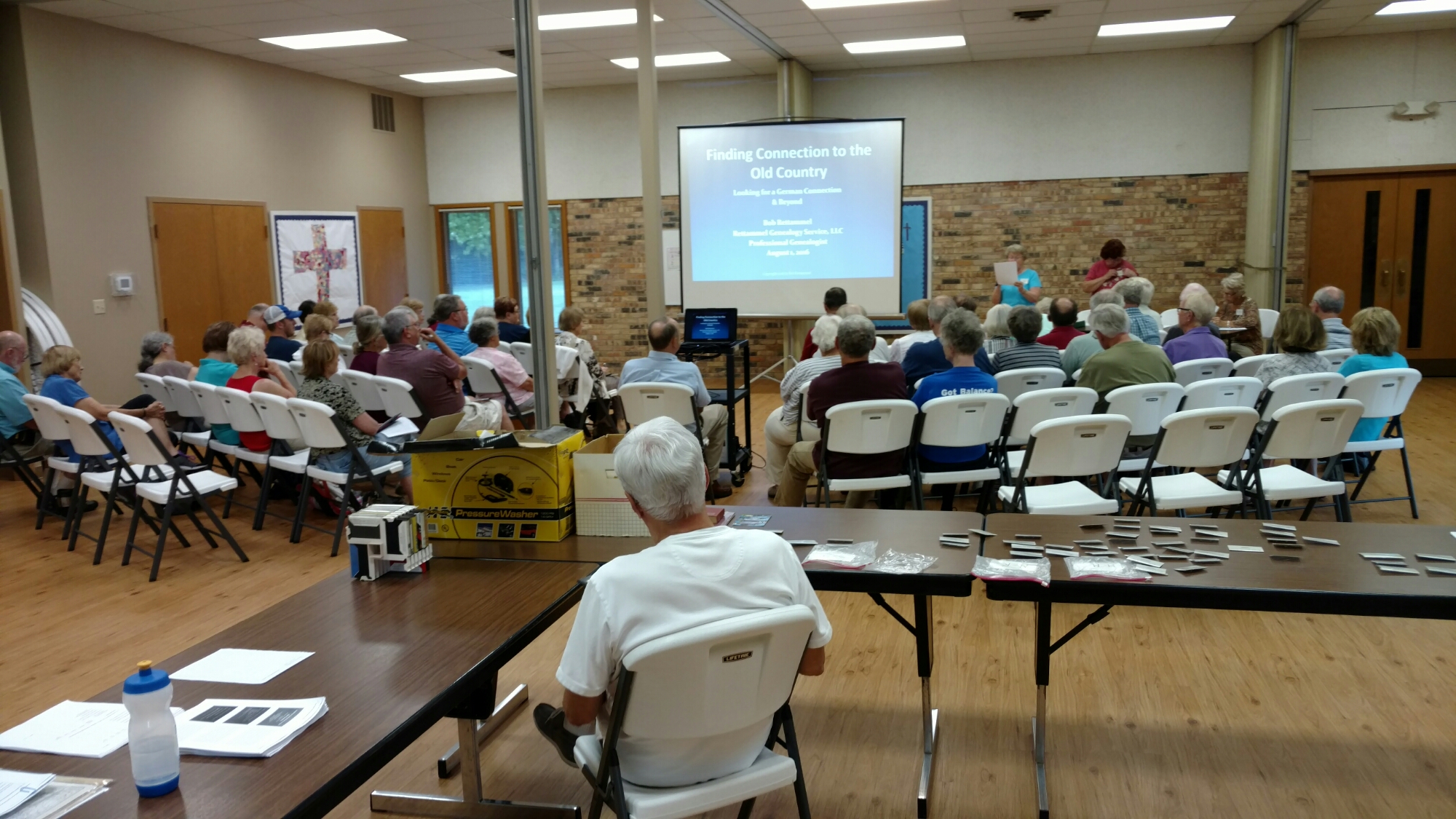
Waiting to provide my case study for making a connection to the Old Country. Which happens to be Gross Boschpol in the former province and state of Pomerania (Pommern).
As a working genealogist one has to be able to develop relationships / network with genealogy societies both nearby and at a distance. This blog article will talk about my experience in developing a working relationship with county and regional genealogical societies, including what I think about prior to making contact, how I make the contact, and what the results and long-term benefits are to my business.
First Experience with a Genealogical or Historic Society
Probably like most of you doing genealogy as a business today, my first experience working with or at a local genealogical society (sometimes referred to as a Historical Society) was when I started my own family research. My own interest in genealogy began many years back as a teenager spending summers in a small town in Juneau County, Wisconsin where my parents’ families both had roots dating back to the late 1800’s.
As an adult my genealogical research began by visiting the county courthouse register of deeds for any vital records. As I made these early visits over 15 years ago I happened to work next to a person who was a local historiographer for Juneau County. At one point I was not sure of some information in an index and what it indicated for my relative’s record on file. The local researcher was extremely helpful and clarified what the index information indicated to help find the actual record on-site. As I spent a couple hours going through records, I was proactive in asking about what research she was doing and what tips she had for the local records. I learned that she was part of the county historical society which helped researchers and established genealogists collect records for family history. At the time of this unexpected meeting and conversation I asked for the contact information of this historical society. Sometime after this I contacted the local society by email and provided a synopsis of my surname research (research log) and asked what other information (records/data) the society might be able to locate. Within a day I received a response back from a representative of the county historic society who referred me to the person I had met at my first visit to the county register of deeds office!
In working further with this researcher I was able to learn that on my father’s maternal German side, my great-grandfather had a local record called a Declaration of Intent to become a citizen back in the early 1900’s. A person does a Declaration of Intent as the first step (first paper) in becoming a citizen, renounces allegiance to former homeland and declares intent to become U.S. citizen. The local county historiographer for the society was able to help locate a primary record of my great-grandfather; the record indicated the date of arrival to America and the port of entry location. It was so exciting to learn this information and to see a copy of the actual record. Plus it helped establish my family timeline of entry to America, when they might have arrived in the Wisconsin county, where I might find a passenger list for my great-grandfather, what town in Germany he left, and maybe family or neighbors he might have traveled with.
As a Genealogical Business Owner
Besides my first genealogical research experience with a local society as a consumer, what has my business experience learned in working with genealogical societies?
I recommend that when you start a genealogical business to collect a list of your local, county and state-wide genealogy society contacts. To gather such information you can go to your local library or find them on the internet. The key is just to have easy access to a list that you as a business owner can quickly access when doing work for your clients. You can either keep a hard copy, an electronic document or spreadsheet. Whatever works for you is the key to having a system that helps you to be efficient and timely for your clients.
As a working genealogist I have learned that developing relationships or contacts with genealogical societies is important to a successful business and satisfied clients. In my business I have traveled to local genealogy or historic societies and charged mileage for use of my own personal vehicle for travel. For my business I have determined that a radius of about 100 miles from my home office is reasonable for clients. For clients that have records or needs outside of this mileage radius, I work with Area Research Centers in my State, and local genealogy society researchers who can look for records on site to help my client. [In a prior GenBiz Solutions article, I refer to this as a strategy for collaborating with other genealogists]. Prior to any extra expense for my client, I first provide a detailed written explanation by email about what other resources we may need to finish record collection. I don’t believe additional work should be done without full disclosure to the client that other expenses may incur to locate the records originally requested or that are newly found and will add to the family history search.
For example in the last year I had a client whose paternal family was located in a city that has an active historical society. Prior to going to this location I made sure to have my research log for this family current with findings. The main item for those starting a genealogy business is to think about your purpose and what you are looking for when you start field research for a client. I made contact with the local historic society through email and a follow-up telephone call to work out a date to visit and what records I was expecting to review during my scheduled visit. My experience has been that the local societies like to have time prior to a genealogist’s visit to prepare properly, so they can have the necessary index or books available along with someone there to help with questions. Remember that many of these local societies are managed by volunteers who like to help those doing family history searches. As a business owner it is prudent to leave the society a donation for their services. Remember you may use their services another time or another genealogist will, so acknowledging them is beneficial to all of us.
The result of my travel and time at the city (local) historical society was fruitful in the amount of information I found for the client’s family, including information about the business they owned over 100 yrs ago in the city. Due to the business and civic events this family was involved with I found a number of historic pictures that were not known by my client’s family.
A most recent experience for a client looking for probate records led me to make contact with a local society that is some distance from my location. This society after reviewing my request and credentials sent (at no cost) the records to an Area Research Center near me, where I reviewed the probate records. This is an example of how a genealogist works with their local societies and regional genealogical centers to find and provide access to the records for business clients.
Working with fellow genealogists, volunteers, and librarians can be rewarding for its shared passion of family history, and making connections can aid in your professional development and in the marketing of your business. Plus we always learn something new and enhance our skills as professional genealogists.
Author: Bob Rettammel
Association of Professional Genealogists
Owner: Rettammel Genealogy Service, LLC
Website: rettammelhistory.com
FacebookB Page: http://www.facebook.com/rettammelgenealogyservice/
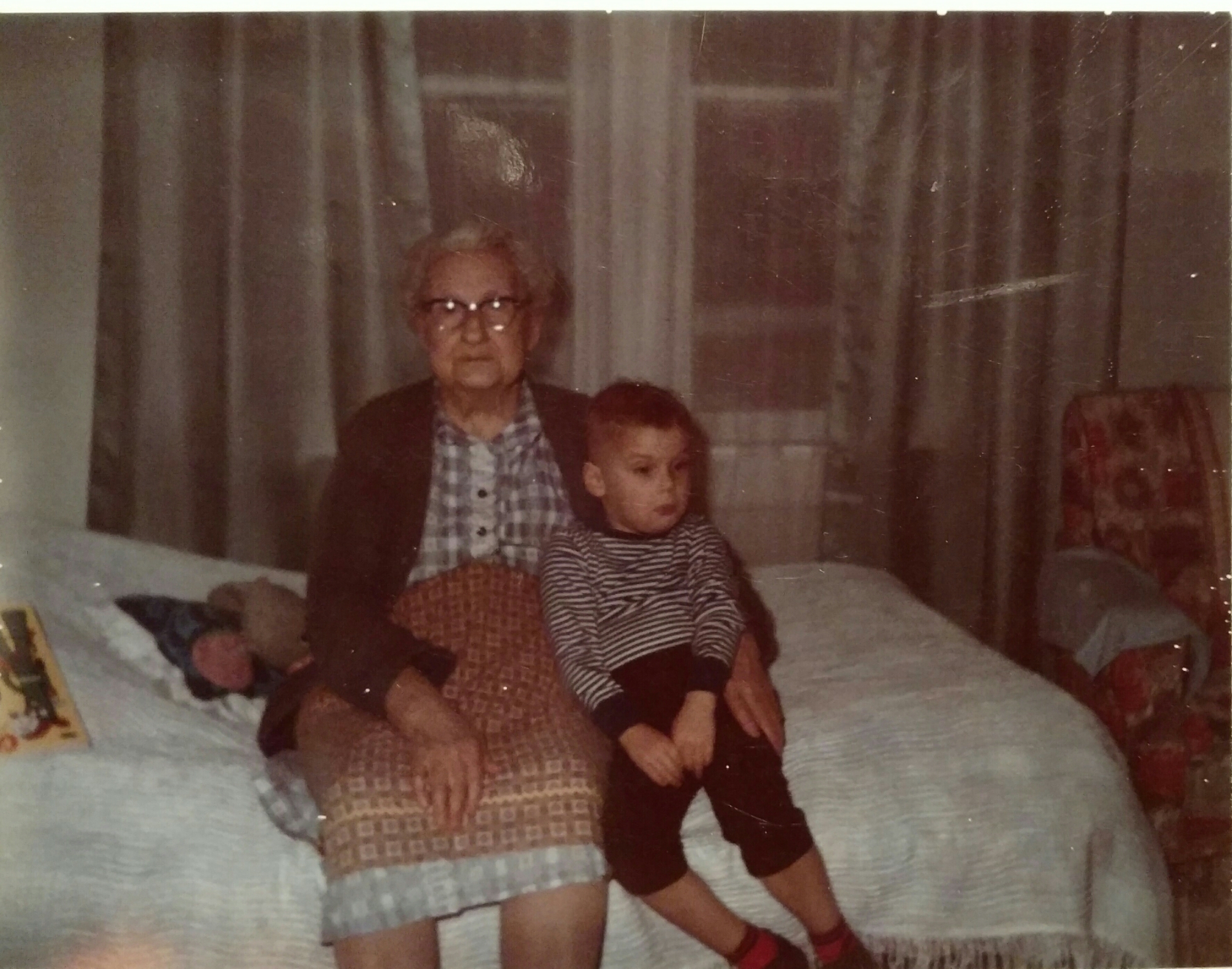
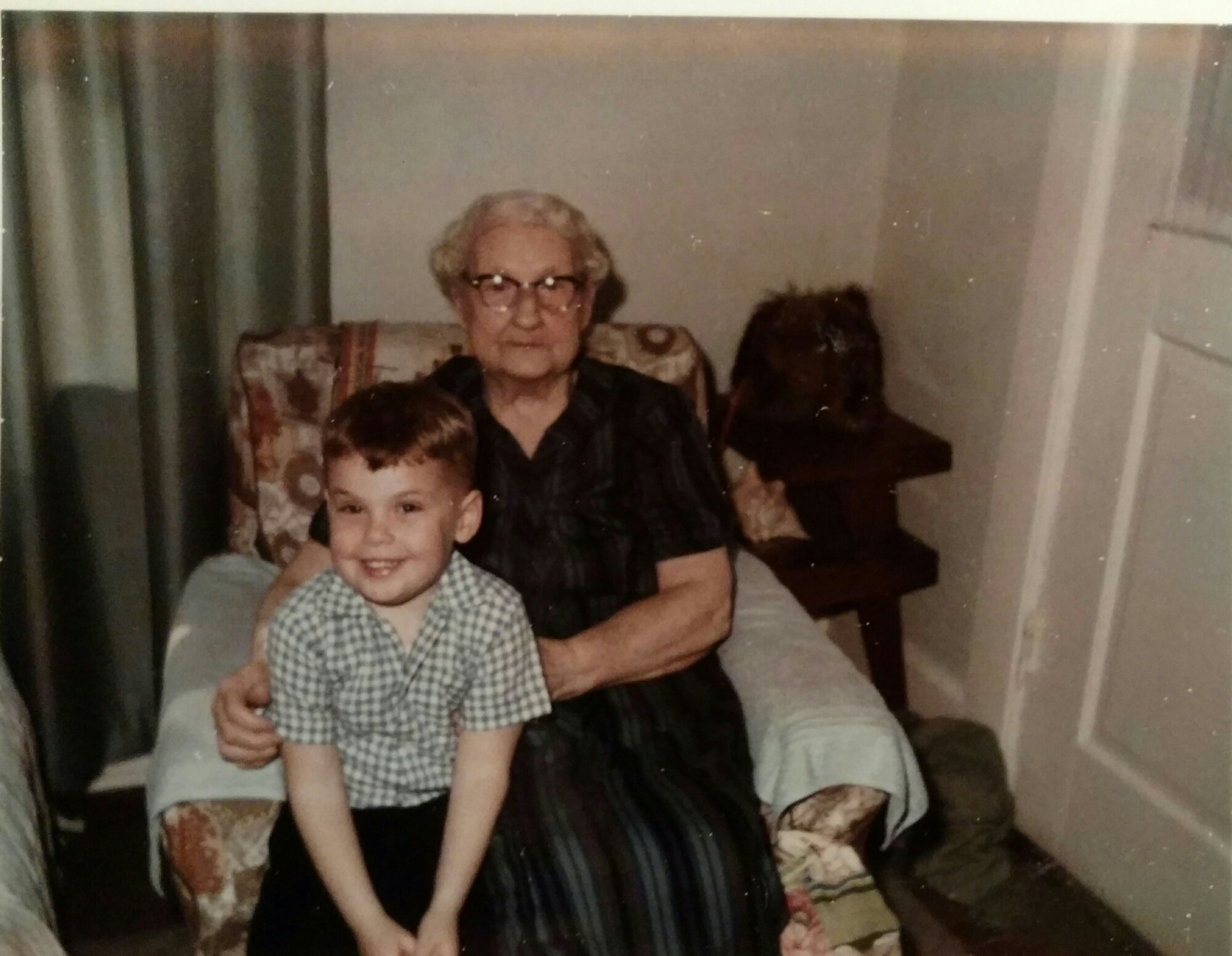
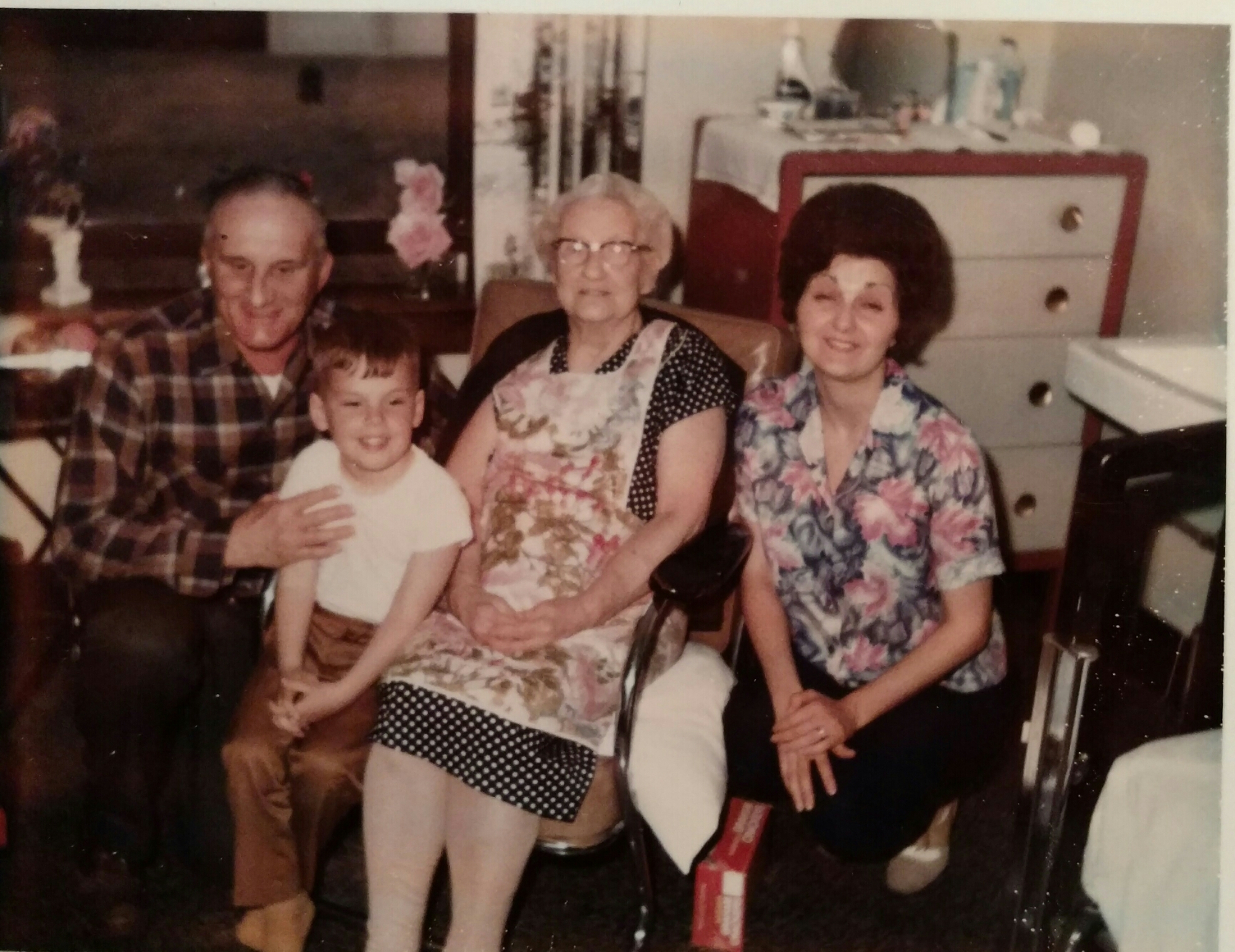
Here are pictures 1967-1969 of me and my Grandma Ernestine Louise Wendland who married August H. Rettammel, Sr in 1909 in Lyndon Station, Wi. My Mom and Uncle Art Rettammel are in last photo from 1969.
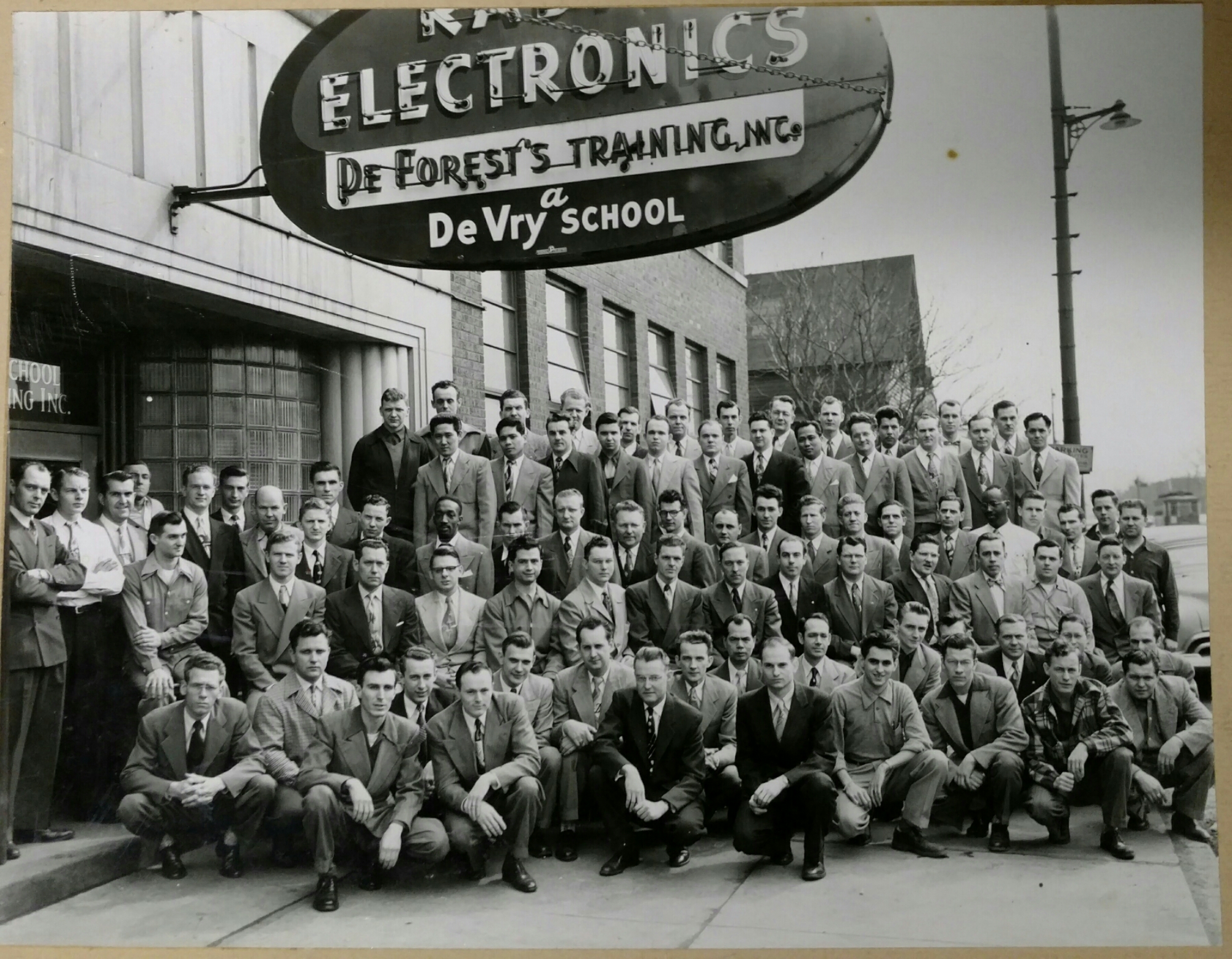
My Uncle Bill Rettammel is in center under “a” of sign, third row from top. Early 1950’s photo in Dane County, WI.
 Rettammel Genealogy Service